Cocoa percentages and chocolate types explained
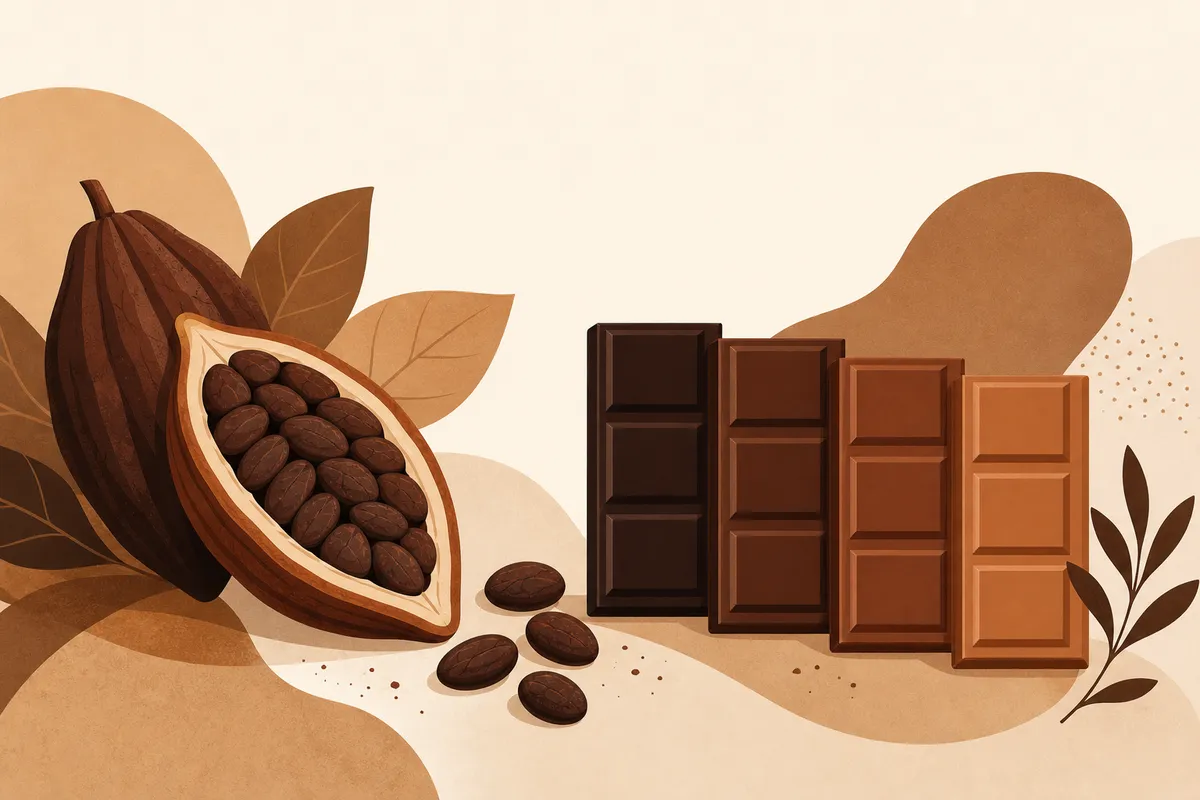
The percentage on a chocolate bar tells you how much of it, by weight, comes from the cocoa bean. That includes both cocoa solids and cocoa butter. The rest is mostly sugar, plus milk in milk chocolate.
Understanding percentages and styles makes it easier to choose a chocolate subscription that matches your taste. This is general knowledge, not a tasting review of any specific maker.
What the percentage actually means
A 70 percent dark chocolate is roughly 70 percent cocoa bean content and about 30 percent sugar. A higher percentage usually means less sugar and a more intense, sometimes bitter flavour, though recipe and bean quality matter too.
Percentage is not a quality score. A well-made 60 percent bar can taste better than a poorly made 85 percent one. It is a guide to intensity and sweetness, not to how good the chocolate is.
Dark, milk and white
Dark chocolate typically ranges from around 50 percent up to 90 percent or more. Milk chocolate adds milk solids and is usually lower in cocoa, often around 25 to 40 percent. In the UK and EU, milk chocolate must contain a minimum percentage of cocoa solids to be labelled as such.
White chocolate contains cocoa butter but no cocoa solids, which is why it is pale and very sweet, and why some people argue it is not truly chocolate. It still counts as a chocolate product under UK labelling rules with a minimum cocoa butter content.
Single origin, blends and bean to bar
Single origin chocolate uses beans from one country or region and often highlights distinct flavour notes. Blends mix beans for a consistent house style. Both approaches can produce excellent chocolate.
Bean to bar makers control the process from raw bean to finished bar, which appeals to people who want traceability and craft. Many artisan chocolate subscriptions focus on this style.
How to store chocolate
Store chocolate somewhere cool and dry, ideally around 15 to 18°C, away from strong smells, since it absorbs odours easily. Keep it out of direct sunlight and away from radiators.
Avoid the fridge where possible. Condensation can cause a whitish sugar bloom, and temperature swings can cause fat bloom, the pale streaks you sometimes see. Both look unappealing but are safe to eat.
Frequently asked questions
Does a higher cocoa percentage mean better chocolate?
No. Percentage indicates intensity and sweetness, not quality. A higher percentage means more cocoa and less sugar, but craftsmanship and bean quality decide how good it tastes.
Is white chocolate real chocolate?
White chocolate contains cocoa butter but no cocoa solids. It is sold as a chocolate product under UK rules with a minimum cocoa butter content, though some people do not consider it true chocolate.
Why has my chocolate turned white?
That is usually bloom, caused by sugar from condensation or fat from temperature changes. It affects appearance and texture but is safe to eat.