Coffee grind size and brew ratios explained
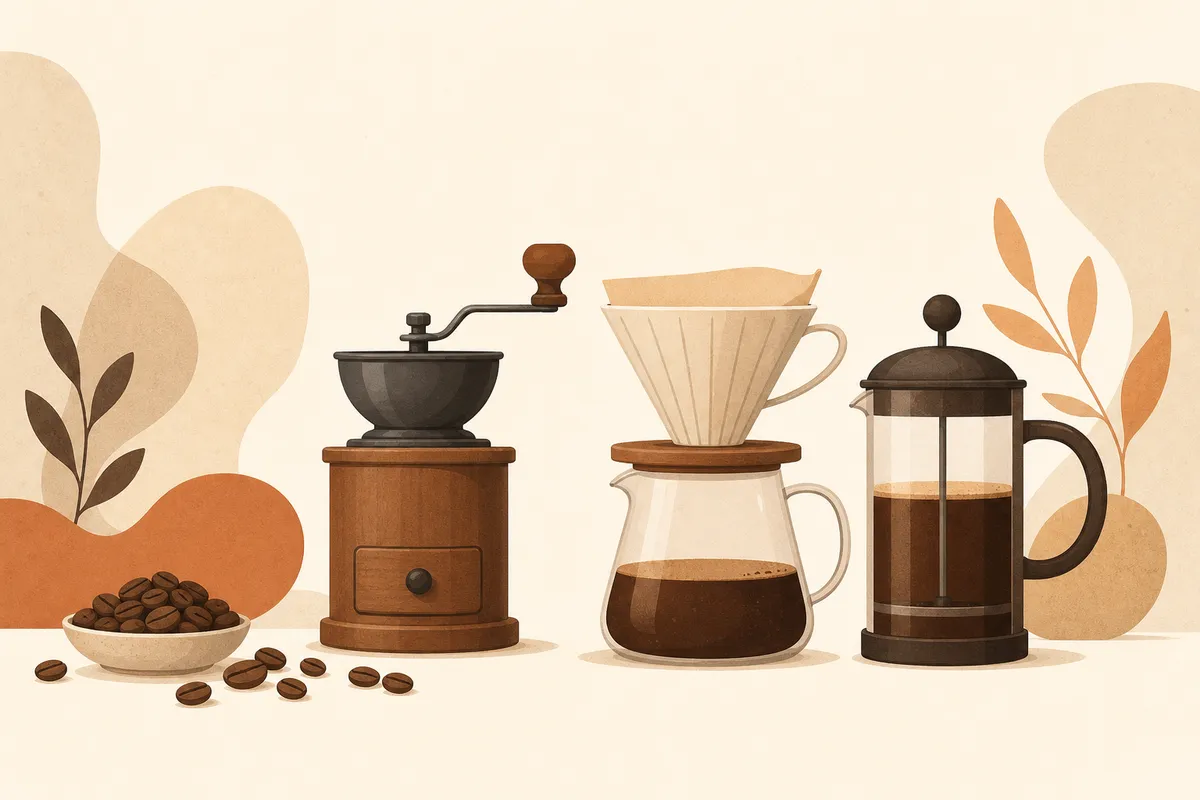
Most home coffee problems come down to three things: grind size, water temperature and the ratio of coffee to water. Get those right and a mid-priced bean tastes far better than an expensive one brewed carelessly.
This is general brewing knowledge, not a product review. Subora does not taste-test the roasters in its catalogue, so treat the figures below as reliable starting points and adjust to your own taste.
Grind size: match it to your brewer
Grind size controls how fast water extracts flavour. Coarse grinds (like sea salt) suit a cafetiere or French press. Medium grinds (like table salt) suit filter and pour-over. Fine grinds (like caster sugar) suit espresso, and extra-fine, almost powdery grinds suit Turkish coffee.
If coffee tastes bitter and harsh, the grind is probably too fine for your method, or the brew ran too long (over-extraction). If it tastes thin, sour or watery, the grind is likely too coarse or the brew too short (under-extraction). Change one variable at a time.
Brew ratios that work
A widely used filter ratio is around 1 part coffee to 16 or 17 parts water by weight, roughly 60 grams of coffee per litre. A cafetiere is often brewed a touch stronger, near 1 to 15. Espresso uses a much tighter ratio, commonly around 1 to 2, such as 18 grams of grounds producing about 36 grams in the cup.
Weighing with a kitchen scale is the single biggest upgrade for consistency. Scoops vary because beans differ in density, so the same scoop can give very different strengths from one bag to the next.
Water temperature and timing
Aim for water around 90 to 96°C, which is just off the boil. Water straight from a rolling boil can scorch the grounds and add bitterness, so let the kettle rest for 30 seconds or so after it clicks off.
As a rough guide, a French press steeps for about four minutes, a pour-over runs for roughly three minutes, an AeroPress takes one to two minutes, and an espresso shot pulls in about 25 to 30 seconds. Use these as anchors, then tune to taste.
Simple ways to improve any cup
Use fresh, filtered water, since coffee is mostly water and hard or chlorinated water dulls flavour. Pre-warm your cup or brewer so the temperature does not drop too fast.
Buy whole beans and grind just before brewing if you can. Ground coffee has far more surface area exposed to air, so it loses aroma within days rather than weeks.
Frequently asked questions
What is the best coffee-to-water ratio?
For filter and pour-over, start near 60 grams of coffee per litre of water, roughly 1 to 16. Adjust stronger or weaker to taste, changing one variable at a time.
How hot should the water be for coffee?
Around 90 to 96°C, just off the boil. Letting a kettle rest for about 30 seconds after boiling usually lands in this range.
Why does my coffee taste bitter?
Bitterness usually means over-extraction. Try a slightly coarser grind, a shorter brew time, or slightly cooler water, and re-test.